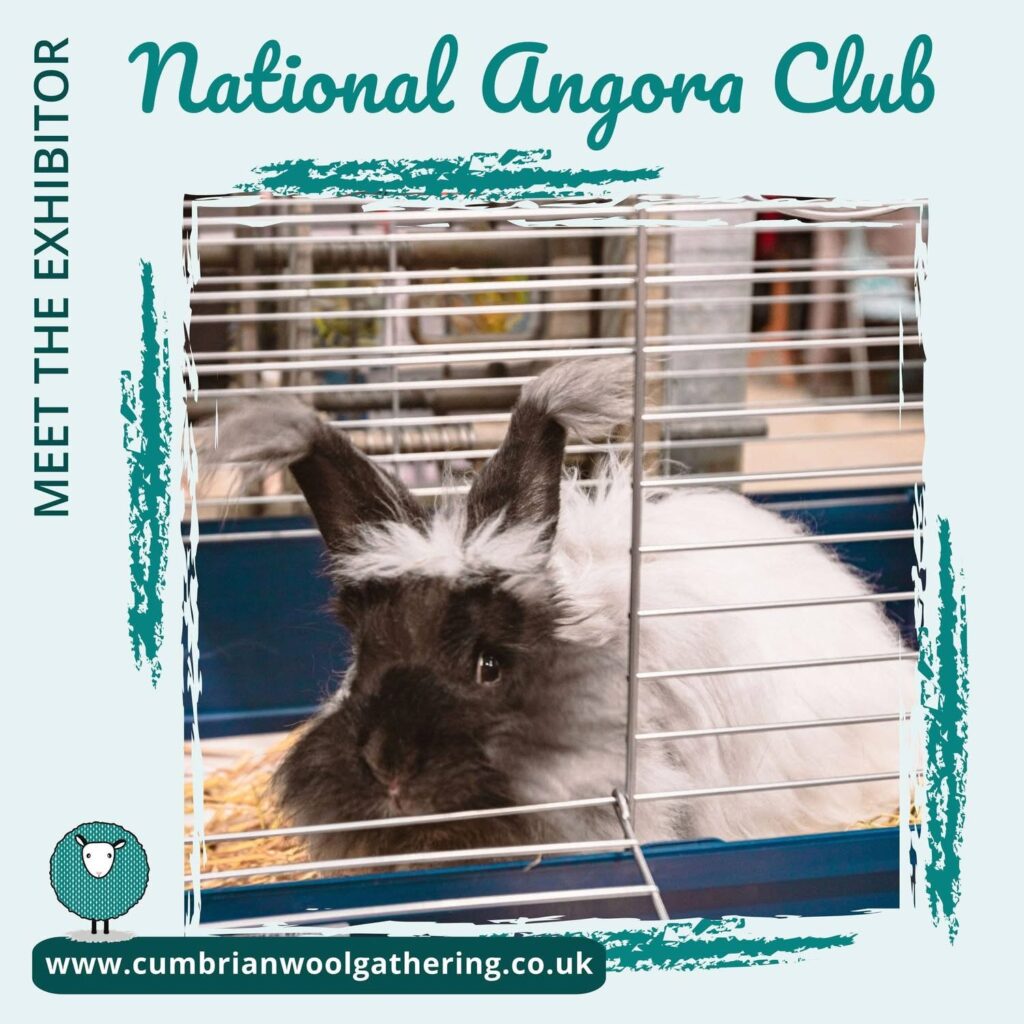
There will be plenty of cute, fluffy animals at the event – but these might be the cutest and fluffiest 💚🧶
There will be plenty of cute, fluffy animals at the event – but these might be the cutest and fluffiest 💚🧶
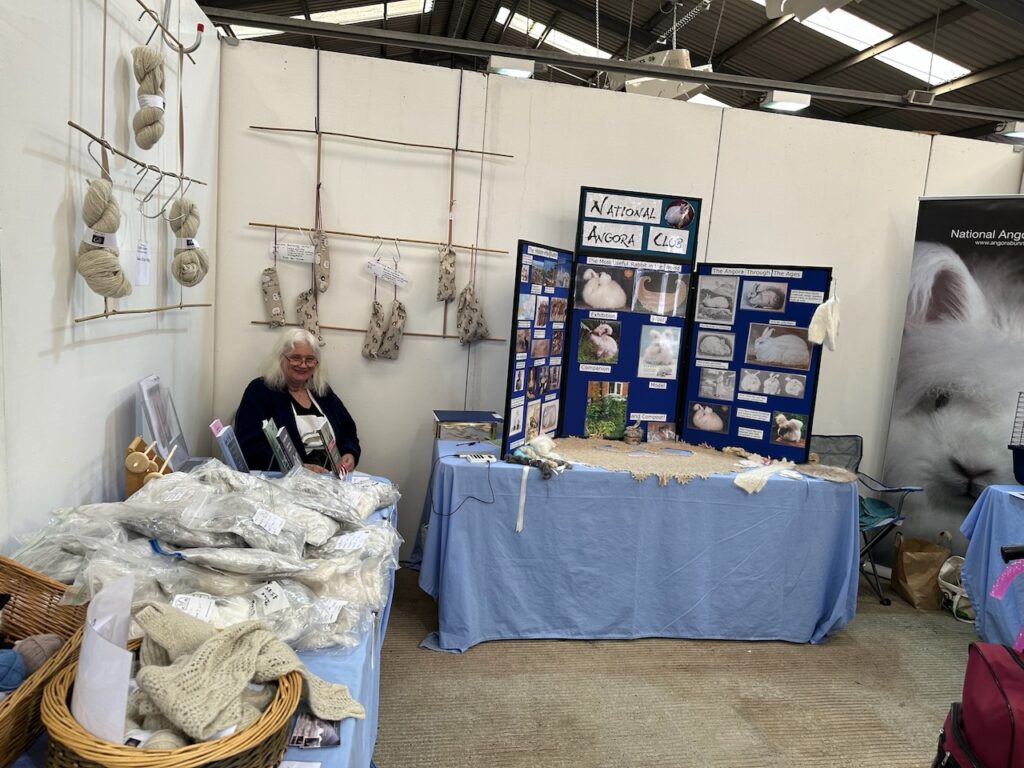
We had a very successful weekend at wonderwool, the weather was fine and we had a record number of visitors for their 20th show.
The national angora club will be exhibiting at the Wonderwool show.
Do come along and meet us there.
We will be selling our raw spinning and felting raw wool , spun wool. Plus 50 gm balls of Rainhill wool 80% angora / 50% merino.our own spun wool 50% angora/ 20% blue faced Leicester.
We will be offering lessons on spindle spinning, by our chairman Dr Lesley Hordon.
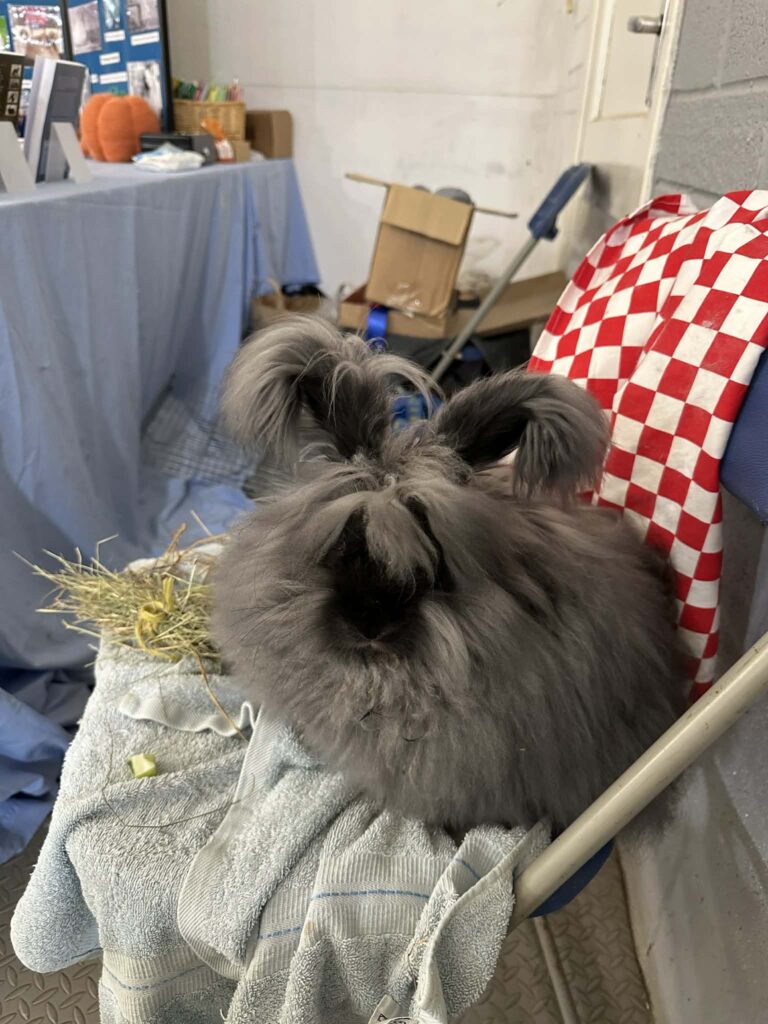
Come along and meet us, and our rabbits Harribulis and Lazslo. It ias at the Royal Welsh Showground, Builth Wells, Wales, LD2 3SY from Saturday 10am – 5.30 pm to Sunday 10 am- 4.30 pm.
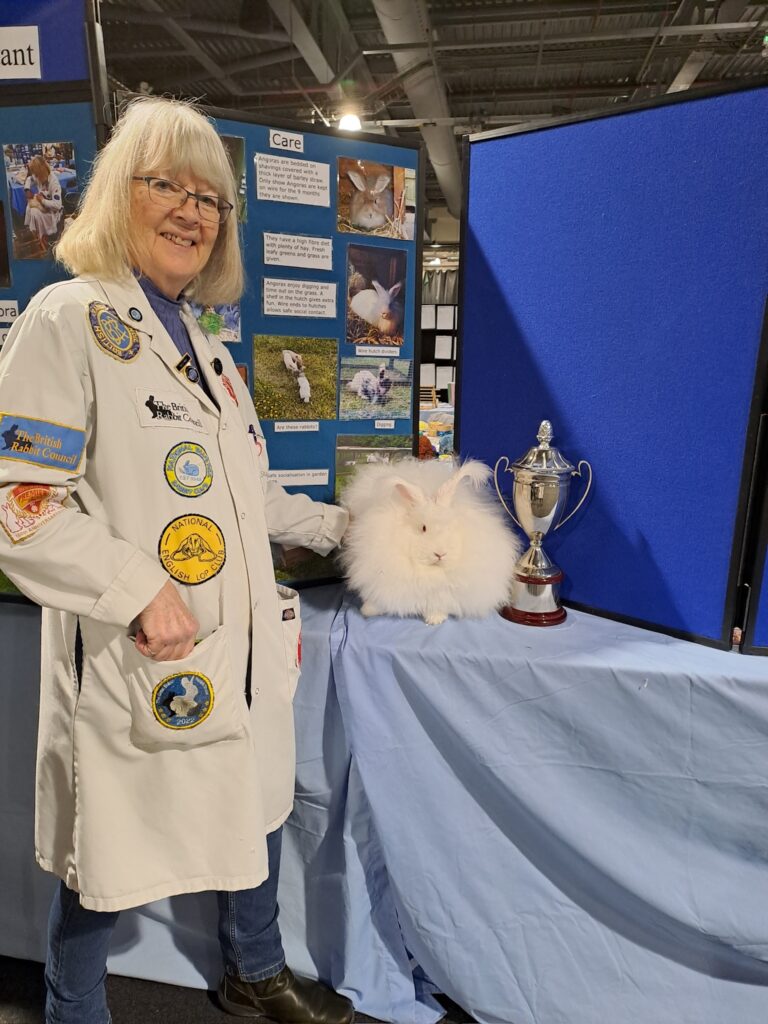
There were 4 angoras at Bradford premier small animal show this year and they were all adults with Ros Waring judging all the classes in the angora section. One white, two golden’s and a sable brood doe/stud buck.
There were twelve angoras entered in the main show and stock show held at the London championship show . However three were absent but it was the biggest entry for some years. Mainly thanks to Christine Hamilton who had managed to bring seven along, very brave.

The National Angora Club will be at the Summer Wool Festival at Ampthill in 10 days time. We will be in the Marquee, so do come and see us there. Free spindle spinning lessons on the stand, and Angora fleece, yarm, books, spindles and spindle spinning kits for sale. Come along and join us and say hello.


We will be going to the Cumbrian Wool Gathering again on Saturday 21st June and Sunday 22nd June. Free spindle spinning lessons and demonstrations on the stand. And lots of people happy to talk about Angoras! Do come and see us.
What role did rabbits play in the Second World War?
In Britain rabbits were an essential source of food for the population, at a time when merchant seamen were risking their lives importing food through perilous seas. The Government encouraged rabbit keeping, allocating rabbits their own bran rations, which were issued by an exiled Ministry of Agriculture and Fisheries from the Hotel Glendower, Lytham St Anne’s. Rationing ended for both people and rabbits in 1953.

Angora wool was in demand for export, so Angora owners could “do their bit” without having to slaughter their rabbits. However, some crossed their Angoras with other breeds to provide meat rabbits, whilst keeping a small stock pure-bred for after the War.

Rabbit shows continued throughout the War. It was “the expressed wish of the Government that recreations and entertainments should continue.” Morale was very important, and many shows raised money for the Red Cross. This picture was taken at the Bradford Show in 1943. Notice the Government propaganda in the background!
Rabbits served as mascots in all branches of the Armed Forces. Muncher, a Naval rabbit, munched lettuce leaves on the platform of his “ack-ack” gun, during action. Bofors, the RAF rabbit, ran after the ball at his unit’s football matches, and chewed the men’s bootlaces in two in the billets. Eisenhower, an Army rabbit, landed with the Green Howards on D-Day and prisoners of war kept rabbits in Stalag 383 and Milag Nord.

The British Army in North Africa brought their pet rabbits, cats, monkeys and pigeons to the PDSA hospital in Abbasia, near Cairo.

Angora rabbits were important to the German Forces. The Luftwaffe had no less than half a million Angoras, whose wool provided their fighter pilots with warm underwear. Heinrich Himmler of the Waffen SS ran a more sinister programme. 31 concentration camps had Angora farms, with the rabbits cared for by the prisoners, and their wool provided warm clothing for the troops.

This Polish concentration camp was one of many with an Angora farm attached. Others included Dachau, Ravensbruck and Auschwitz.
By a special Victory Rabbit Show of course!

“Breed for Victory! The Story of the Rabbit in the Second World War” is available from Fur and Feather https://furandfeather.co.uk/product/breed-for-victory-by-lesley-hordon/


A quick post just to say that the national angora club will have a stand at the next Wonderwool on the 26th and 27th of April 2025. We will be selling our raw spinning wool and felt wool. Plus 50 gm balls of Rainhill wool 80% angora /20% merino. Our own spun wool 50% angora/50% blue faced Leicester.
Our chairman dr Lesley Hordon will be happy to give drop spindle lessons.
Come and see us and meet our rabbits Harribulis and Lazslo.

Over the last seven years I have had two house bunnies. Jensen and Dottie (in the first picture). Jensen was my first rabbit and he bonded with me like I was another rabbit. At the same time every day Jensen would nudge me and that was his way of telling me, it was time to play.