Brown-Grey breed standard
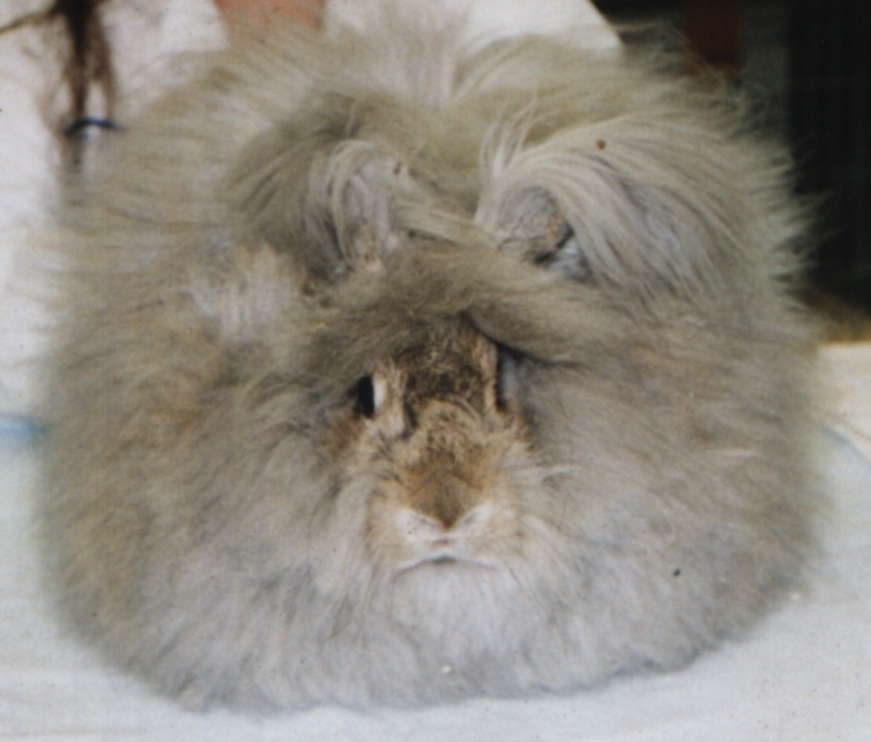
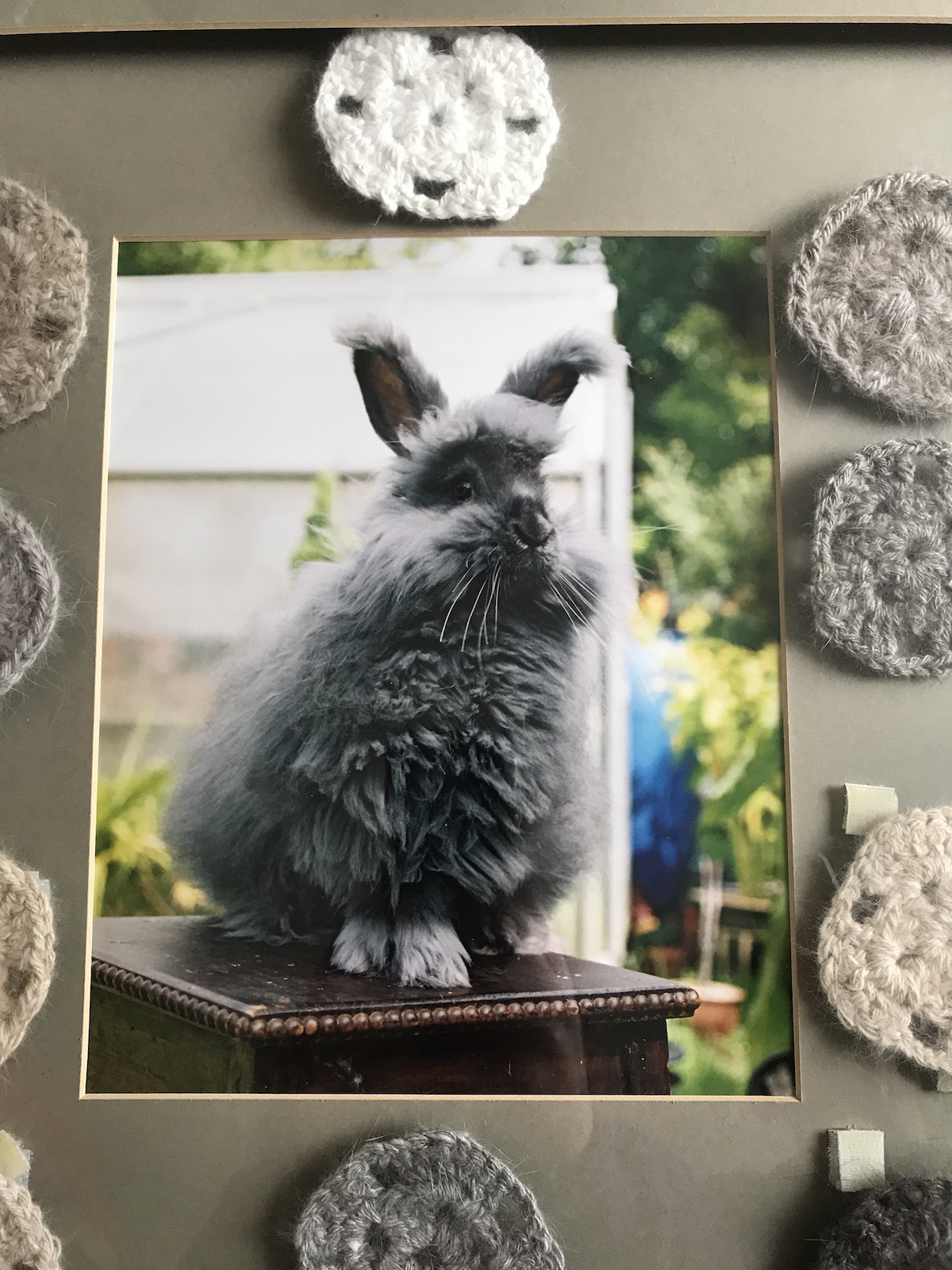
- Head, ears and feet wild grey, a mixture of black and gold
- Wool blue, as dark as possible with tips to match head
- Eyes brown
- White belly with blue under-colour


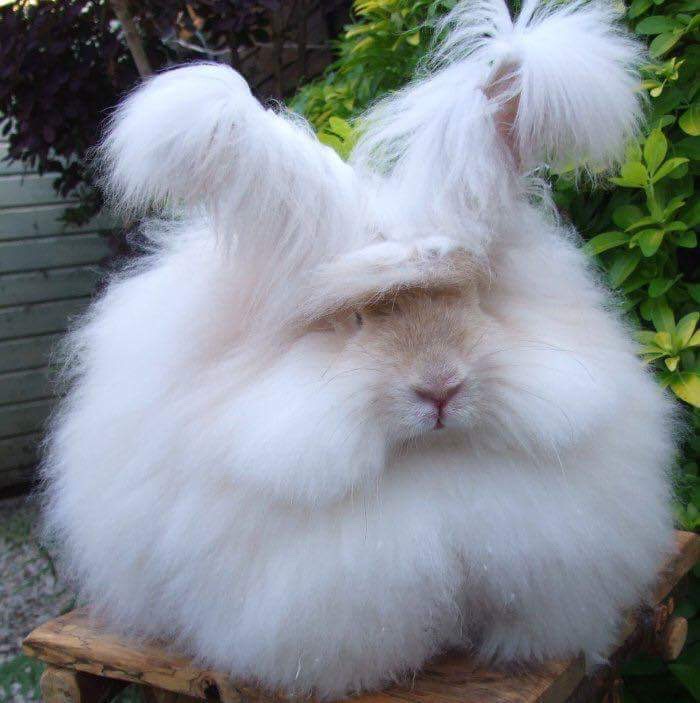
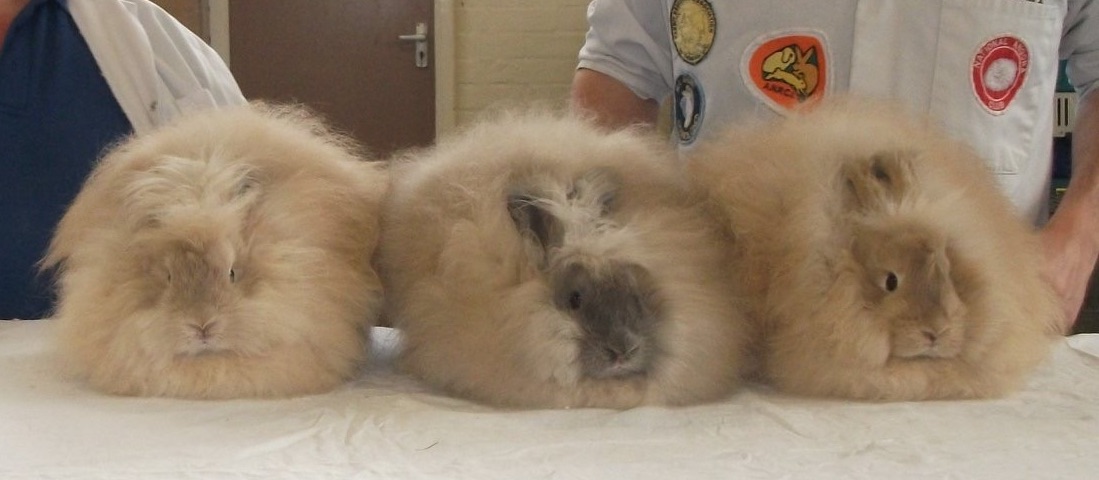
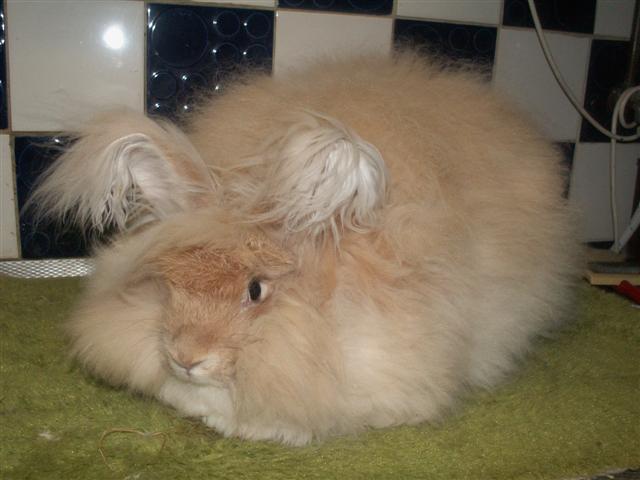
The Cream is an Agouti colour. The Cream can be thought of as a dilute Golden (picture on the right) , and a Cream bred to Cream (picture on left, a really good cream colour) for many generations will have the genotype AABBCCddeell. At present this colour is relatively uncommon, although several breeders are now trying to increase the numbers of Cream rabbits available.
It has taken many years to develop the lovely coloured angoras we now have, many of which match any white in quality, so let us preserve these colours. Recently many people I have talked to have expressed a worry that in order to prevent too much inbreeding of their stock they were beginning to cross colours. I too am guilty of this but I hope I have been doing it responsibly as all colours that are not ‘right’ should be kept at home or sold as pets.
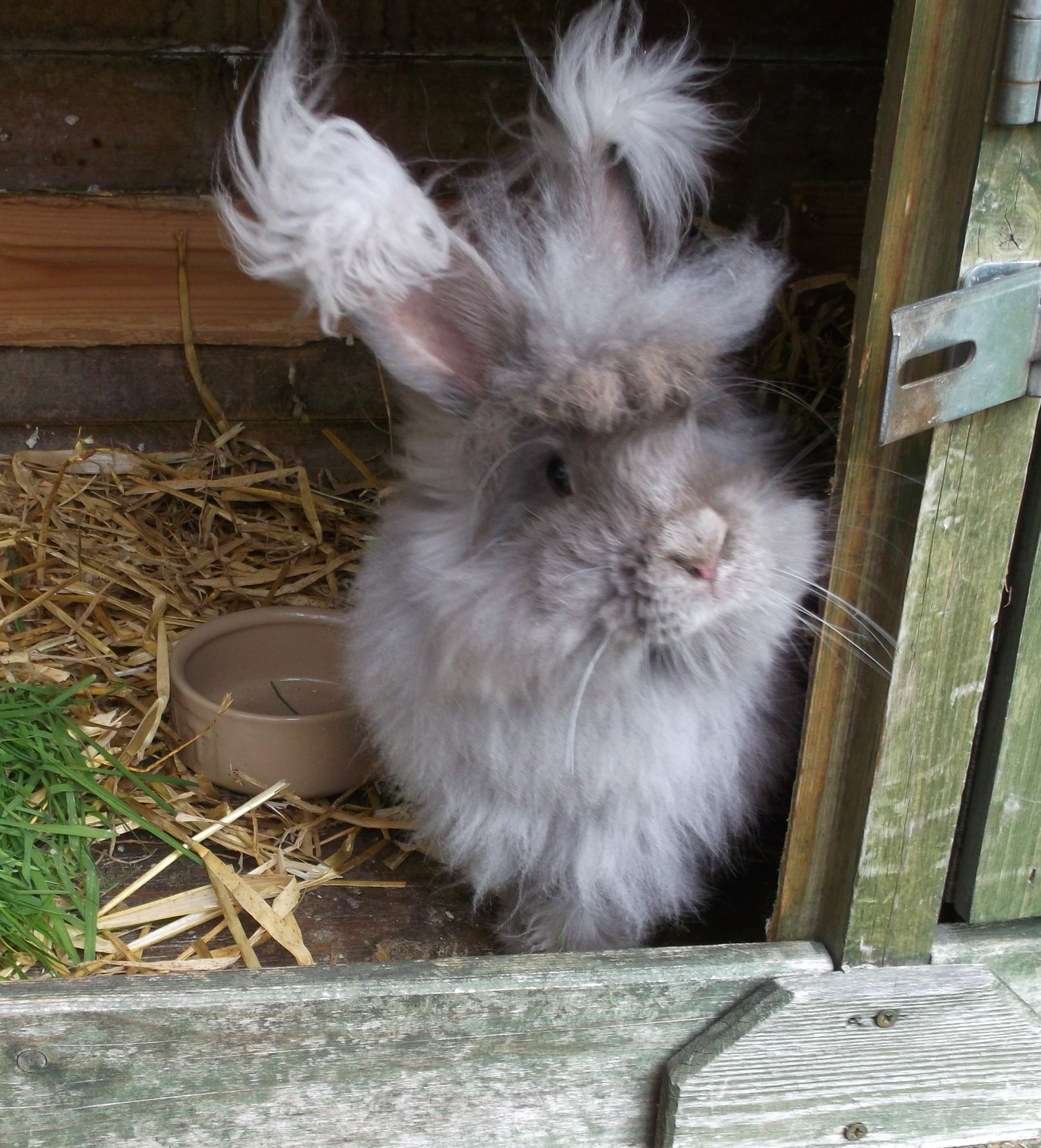
The Blue is a self colour, and when bred to Blue for several generations has the genotype aaBBCCddEEll. It can be thought of as a dilute Smoke.
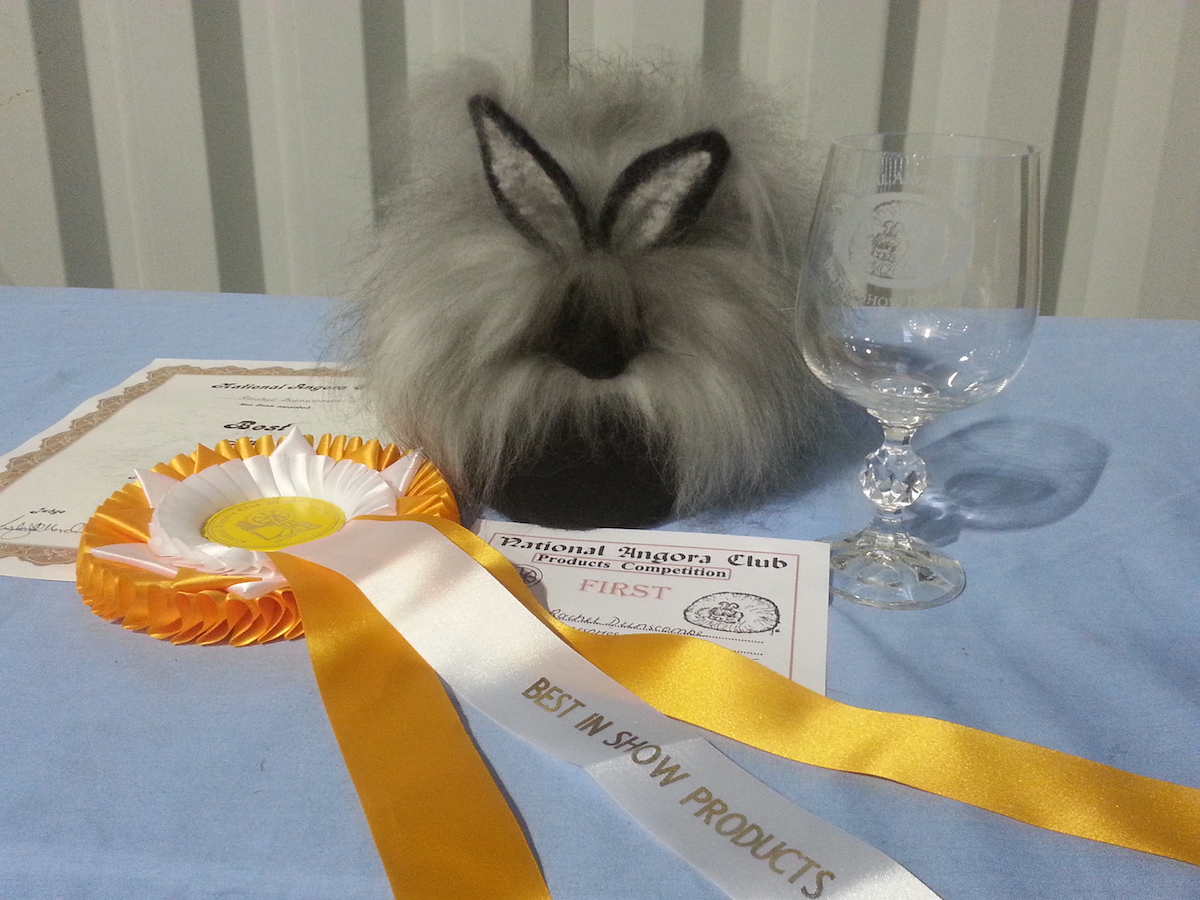
I have been keeping rabbits since I was 7 years old (first rabbit was and English lop/cross called Loppy) I met my first angora rabbit a few years later, when the mother of my best friend bought a smoke (Blossom) so she could spin and knit the fibre. This was my inspiration for my love of the breed and specifically smoke. Several breeds later I bought my two beautiful boys Benjamin and Elliot from the wonderful Sally May in 2014.
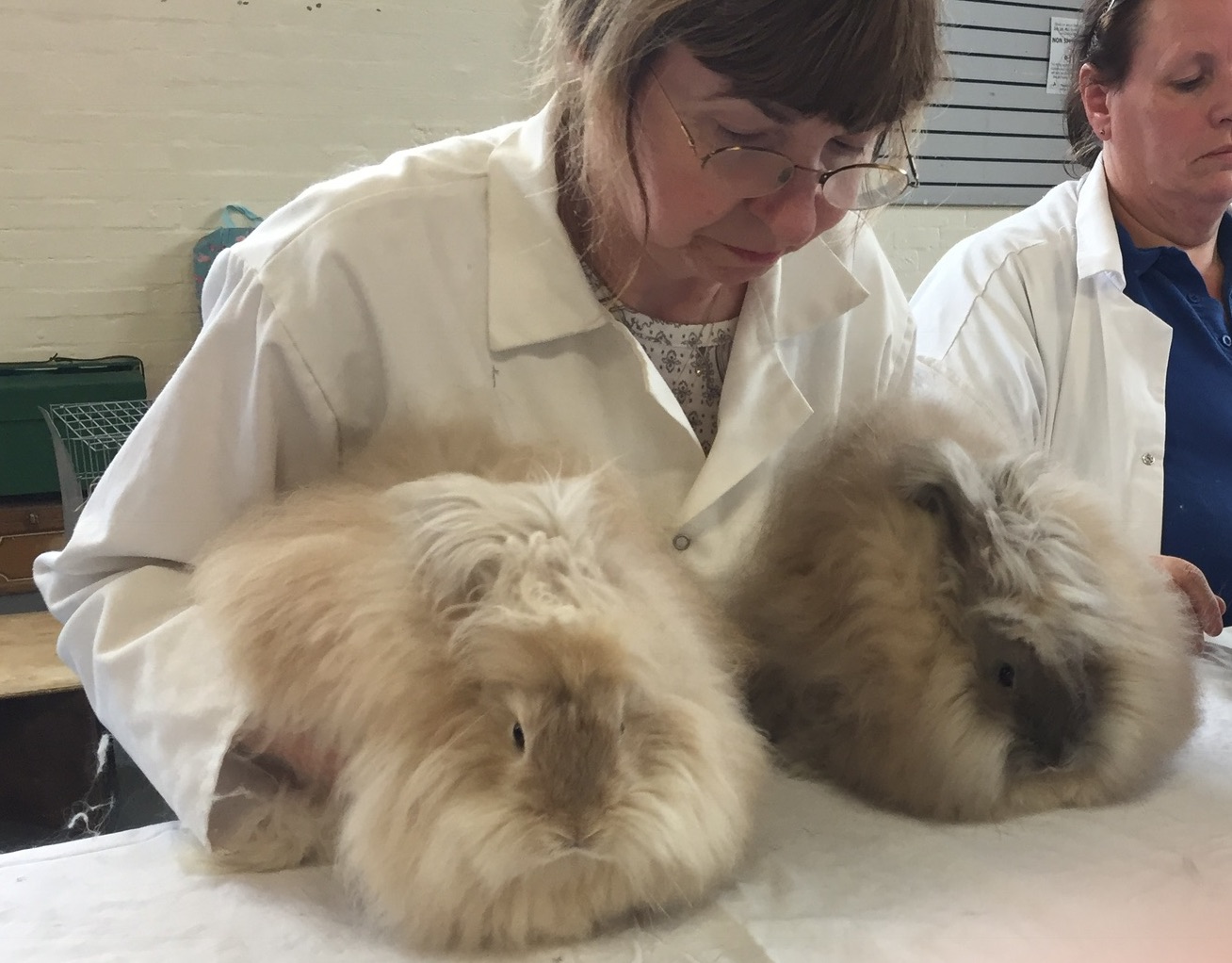
Blue Cream is a self colour, not an Agouti colour, and a Blue Cream bred to Blue Cream for several generations will have the genotype aaBBCCddeell. It can be considered to be a dilute version of the Sooty Fawn.
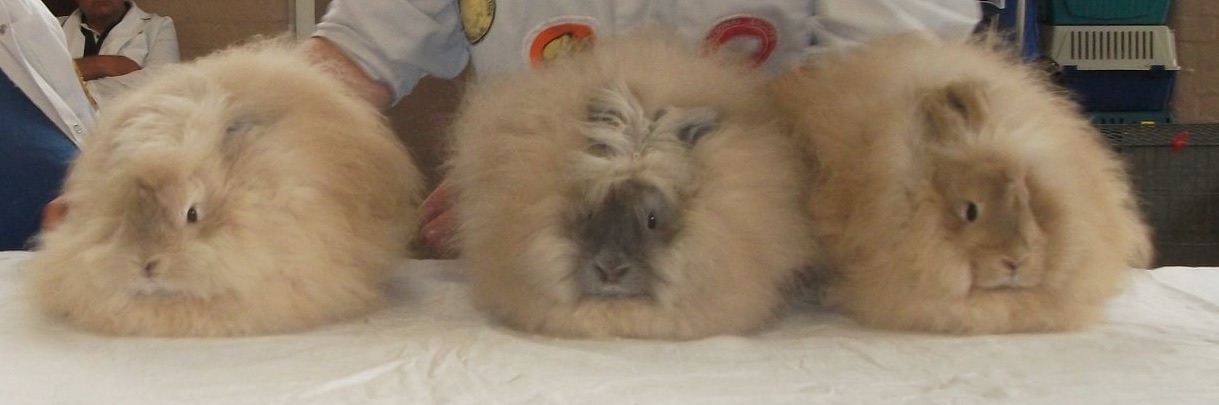
This is one of the oldest colours of Angora, but sadly now is relatively rare. It is an Agouti colour, and when Golden has been bred to Golden for many generations, has the genotype AABBCCDDeell
I was sorry to hear the sad news that Ray Whitcombe has died. He was a lovely man who did a huge amount of work for the National Angora Club over the years when he worked as secretary in the 60s and then a few years ago until ill health made him give up. He was an active exhibitor of stock and products as well as an experienced judge in both.I have many happy memories of spending time in his company. Love to his family at this sad time xx
Ray Whitcombe 1939-2018
Rays interest in rabbits started when he was a child, as dinner not keeping! The elderly couple that lived next door to him sometimes shot rabbits to eat and saved him a leg for his tea! His first 2 pets were a pair of chinchillas called Ching and Chang that unfortunately escaped – he always strenuously denied letting them out.
His next foray into rabbit keeping was when he was doing his A Levels. He was living in Chipping Sodbury at the time and bought 2 supposed English does from a local market, these were returned a couple of weeks later as they were both bucks and fought like cat and dog! Next came a Flemish giant the lived for 9 years but it wasn’t until 1966 that his true involvement in the fancy first began. The parents of one of his pupils kept and showed Dutch rabbits and it was with them that he attended his first shows. In 1967 his fate was sealed when, whilst exhibiting at a show, he heard a funny hissing sound. He investigated and found a woman fussing with what he thought was a woolley hat – it was of course Mrs Pratley grooming her show angora. Ray was well and truly hooked and from that moment on Angoras became his passion.
He became secretary of the National Angora Club after the great Joe Holmes retired, stepping down only when he went abroad to teach. On his return to this country he picked up in the angora fancy where he left off. He was a breeder judge, he handspun and was products judge, a council member , Vice Chairman and then Chairman. He always attended stock shows and was a regular visitor at the Ewerby social weekends at Dennis and Sandra’s until ill health overtook him.
This article was written many years ago by Mrs Pratley, a former President of the National Angora Club. For present day Angora keepers, some things have changed. Wool is stored in self seal heavy duty freezer bags rather than newspaper, tins and boxes, and the rabbit is often clipped sitting on the owner’s knee. Plucking is rarely performed nowadays, as to pluck ethically and correctly is extremely time consuming, as it is done over several weeks whilst the rabbit is moulting. Lakeland Mothstop is the product recommended now to protect wool from moths. Waste wool can be composted, or left out for the birds in Spring for nests.